From Victimhood to Collective Agency
The Crowd is often portrayed as a passive or victimised force reacting to events rather than shaping them and directing blame toward the Elite for societal failures. While this dynamic can at times reflect real imbalances of power, this article moves beyond surface narratives to explore the Crowd as an archetype with both light and shadow expressions. Through an archetypal lens, it examines how avoidance of responsibility, projection, and dependency can diminish collective agency, and how reclaiming awareness and participation allows the Crowd to step back into its inherent power. Rather than assigning blame, the article invites a deeper understanding of the Crowd’s role in shaping the systems it inhabits.
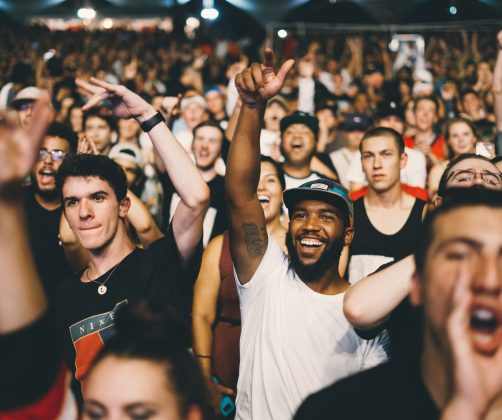
The Crowd archetype represents the collective field of humanity, the anonymous many, the voice of the people, the mass mind, and the invisible heart of society. It is the archetype of belonging, cultural identity, unity and collective momentum. It embodies our innate desire to be part of something larger than ourselves, and it has the capacity to dissolve the individual into the flow of shared beliefs, values, and movements of the group. As such the Crowd has the power to amplify the emotional expression of an individual person who is part of the group and its force. This collective hub of energy can rise to greater heights or dysfunctional and destructive outbreaks.
At its highest expression, the Crowd archetype carries the seed of democracy, empathy, social cohesion, and strength through unity. It becomes a fertile ground where collective wisdom can emerge organically, where shared energy can spark revolutions, ignite cultural shifts, and birth entirely new paradigms. When aligned with truth and purpose, the Crowd moves as one, amplifying the values, intentions, and consciousness of its members into something greater than the sum of its parts.
Yet a crowd also holds inherent volatility. What begins with a positive intention can quickly avalanche into a destructive spiral of behaviour. Once triggered, the energy of a crowd follows a different psychological and emotional profile than that of an individual, it becomes less predictable, more impulsive, and increasingly difficult to contain. In its shadow, the Crowd turns conformist, reactive, unconscious, and highly susceptible to manipulation, mass hysteria, or mob mentality. The same force that can unite people in the name of justice and truth can also obscure nuance, suppress individuality, and turn hostile in the face of fear.
Psychologists argue that it is the collective energy and momentum of the group that gives rise to a new psychological state. This state can generate powerful experiences of unity and shared purpose, but it can also lead to impulsive, irrational, or even destructive actions, especially when driven by fear, excitement, or anger. In short, Crowd Mind Theory suggests that individuals, when immersed in a group, often lose their conscious sense of self and act under the influence of a shared, unconscious group psyche. This aligns closely with Jung’s idea of archetypal activation within the collective, particularly when the Crowd archetype is triggered without conscious integration or leadership to guide its energy.
Unlike the Elite, which seeks elevation and distinction as described in the following chapter, the Crowd archetype seeks unity and resonance. It asks not, “How can I stand out?” but “Where do I belong?” and “Who is with me?” In that, it holds both the deepest promise of collective power, and the greatest risk of collective collapse.
The Light Side of the Crowd: Coherence, Solidarity, and Cultural Intelligence
When expressed in its light, the Crowd archetype brings forward powerful qualities essential to the health of any society. At its best, the Crowd is not a mindless mass, but a living vessel of shared intention and collective potential, a container through which collective evolution can unfold when guided by consciousness, purpose, and truth.
- Shared humanity: The Crowd reminds us that we are interconnected, interdependent, and fundamentally equal in our longing for safety, dignity, and purpose.
- Grassroots wisdom: It channels the intelligence of the people, producing emergent movements that challenge hierarchies and spark transformation from below the higher echelons.
- Cultural cohesion: It upholds traditions and values that bind individuals together through shared identity and belonging.
- Momentum for change: When awakened, the Crowd can become a vehicle for justice, resistance, and new governing systems. Mass mobilisations, from civil rights to climate protests, have shown how the Crowd can move mountains.
- Empathy and resonance: It fosters emotional connectivity, mirroring and amplifying each other’s states in ways that can foster compassion, solidarity, and mutual care.
An inspiring example of a Crowd archetype in peaceful unity resulting in a positive outcome was the Civil Rights Movement (USA, 1950s–60s) led by figures like Martin Luther King Jr., the African American community and their allies formed a widespread, nonviolent movement against racial segregation and injustice. The Crowd archetype was expressed through marches, sit-ins, and protests; not as chaotic masses, but as organised, principled collective action guided by a higher ethical vision. The 1963 March on Washington is a profound example of a crowd acting from its soul force, influencing policy and reshaping public consciousness.
The Shadow Side of the Crowd: Conformity, Chaos, and Unconscious Power
However, when the Crowd archetype is unconscious or manipulated, it slides into its shadow expression:
- Loss of individuality: In its fear of rejection, the Crowd sacrifices unique thought, voice, and integrity for the comfort of sameness.
- Mob mentality: Unchecked emotion can escalate into aggression, hatred, or violence when fear is amplified and critical thinking is suppressed.
- Vulnerability to manipulation: The Crowd is easily swayed by charismatic figures, disinformation, or groupthink, especially when experiencing existential uncertainty.
- Moral disengagement: Individuals within a Crowd can commit actions they would never do alone, absolved by diffusion of responsibility.
- Envy and blame: The shadow Crowd often projects its disempowerment onto external figures; scapegoating elites, leaders, outsiders, or perceived enemies.
In this mode, the Crowd archetype becomes ungrounded and reactive, a fertile ground for populist rhetoric, ideological extremism, or digital tribalism.